La edición en español de esta pieza está en preparación.
Miami's source for art, luxury living & technologyEst. 2026
Technique & Materials
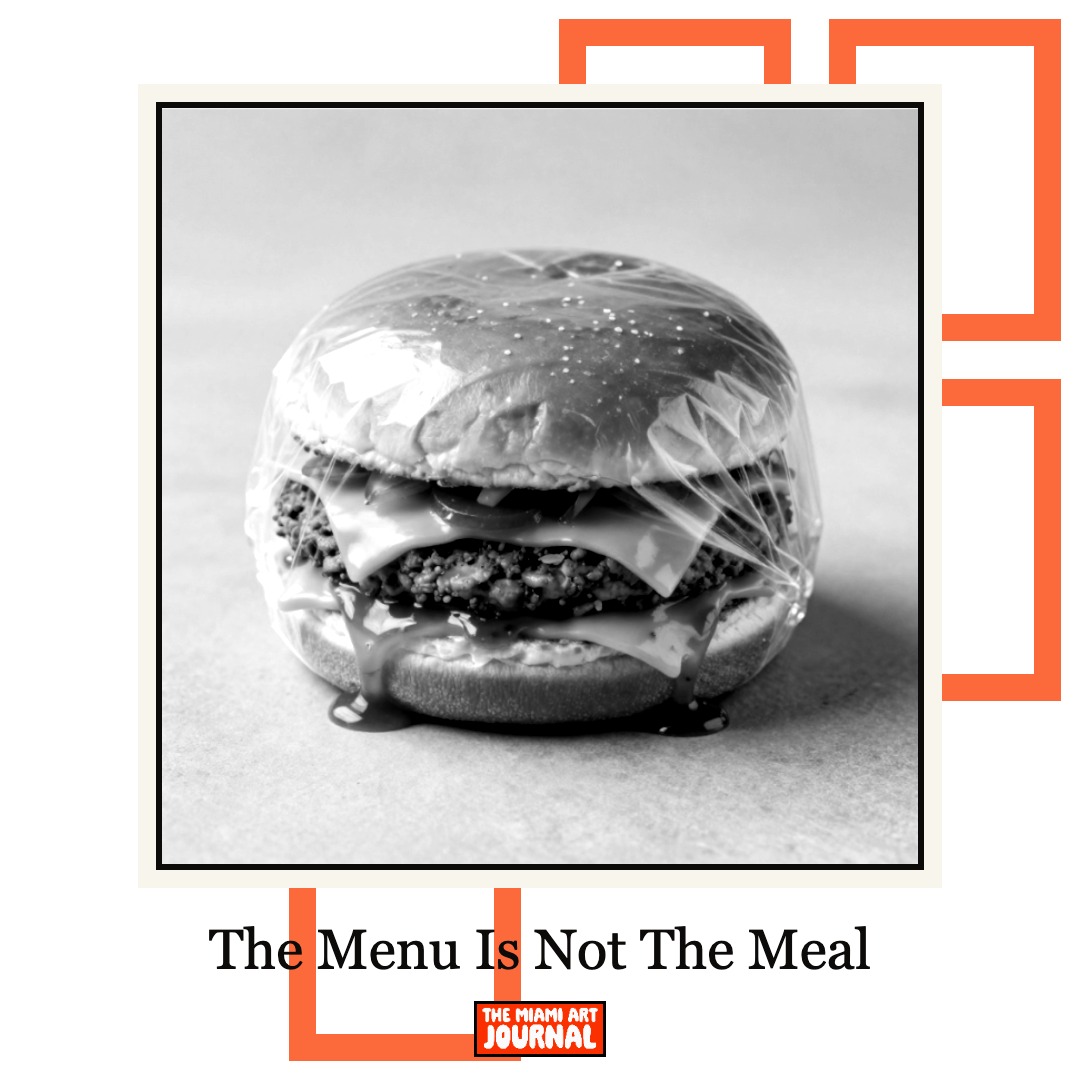
Fake Plastic Burgers
The menu is not the meal
The Editors ·
The growing prevalence of AI-generated menus in restaurants suffers from a "sameness problem." Amanda Silberling of Tech Crunch noted that customers often experience a visceral sense of unease when viewing these images, which appear eerily flawless, precisely symmetrical, and oddly smooth. The publication attributes this uncanny valley effect to models trained on a narrow, "pleasing" aesthetic, suggesting that technical perfection is actually a barrier to appetite.
In Miami, where visual storytelling is as vital as the cuisine itself, this critique hits close to home. We are a city that worships the intersection of art and sustenance, yet we are increasingly fed digital images that lack the grit and grain of reality. The issue is not merely that these images look fake, but that they look dead. They offer a sterile perfection that fails to trigger the hunger that comes from seeing food that has been touched by human hands and time.
Technical precision is not the pinnacle of design, but rather a barrier to the emotional resonance required for compelling visual storytelling. When a menu item is rendered with algorithmic symmetry, it loses the irregular charm that makes us want to eat it. A perfectly symmetrical bagel sandwich may be geometrically ideal, but it is culinarily soulless. We crave the slight asymmetry of the handmade, the char of the grill, and the imperfection that signals authenticity.
The Menu is not the meal. It is an invitation, a promise of experience. When that promise is made by a machine trained on a limited dataset of "pleasing" visuals, the invitation feels hollow. In our galleries and our restaurants, we seek connection. We want to see the effort, the heat, and the life that went into the creation. An image that is too smooth tells us nothing about the soul of the kitchen, only the cold logic of the generator.
A veneer of woodgrain can never replicate the character of life lived from seed to sapling to full grown tree. Similarly, a digitally generated image can never replicate the allure of real food. The market for high-end dining and art in this city relies on the tangible and the true. If we continue to prioritize flawless aesthetics over emotional truth, we risk creating a visual culture that is beautiful but unappetizing, much like the sterile images currently plaguing our cafes.
Takeaway: Demand imagery that breathes, scars, and lives, for only the imperfect can truly hunger us.
Technique & Materials
Hamburguesas de plástico falso
El menú no es la comida
The Editors · September 4, 2026
La creciente prevalencia de menús generados por inteligencia artificial en los restaurantes adolece de un "problema de uniformidad". Amanda Silberling de Tech Crunch señaló que los clientes suelen experimentar una sensación visceral de inquietud al ver estas imágenes, que aparecen extrañamente perfectas, simétricas hasta el detalle y con una suavidad antinatural. La publicación atribuye este efecto de valle inquietante a modelos entrenados con una estética estrecha y "agradable", sugiriendo que la perfección técnica es, en realidad, una barrera para el apetito.
En Miami, donde la narrativa visual es tan vital como la propia cocina, esta crítica da en el clavo. Somos una ciudad que adora la intersección entre el arte y la sustancia, sin embargo, cada vez nos alimentamos más de imágenes digitales que carecen de la aspereza y la textura de la realidad. El problema no es solo que estas imágenes parezcan falsas, sino que parecen muertas. Ofrecen una perfección estéril que no logra despertar el hambre que surge al ver comida tocada por manos humanas y por el tiempo.
La precisión técnica no es la cima del diseño, sino más bien un obstáculo para la resonancia emocional necesaria para una narrativa visual convincente. Cuando un plato se representa con una simetría algorítmica, pierde el encanto irregular que nos hace querer comerlo. Un sándwich de bagel perfectamente simétrico puede ser geométricamente ideal, pero culinariamente carece de alma. Anhelamos la ligera asimetría de lo hecho a mano, las marcas de la parrilla y la imperfección que señala autenticidad.
El menú no es la comida. Es una invitación, una promesa de experiencia. Cuando esa promesa es hecha por una máquina entrenada en un conjunto de datos limitado de visuales "agradables", la invitación se siente hueca. En nuestras galerías y en nuestros restaurantes, buscamos conexión. Queremos ver el esfuerzo, el calor y la vida que entraron en la creación. Una imagen demasiado suave no nos dice nada sobre el alma de la cocina, solo la lógica fría del generador.
Un chapa de imitación de veta de madera nunca puede replicar el carácter de una vida vivida desde la semilla hasta el árbol joven y luego hasta el árbol maduro. De manera similar, una imagen generada digitalmente nunca puede replicar el atractivo de la comida real. El mercado de la alta gastronomía y el arte en esta ciudad depende de lo tangible y lo verdadero. Si seguimos priorizando la estética impecable sobre la verdad emocional, corremos el riesgo de crear una cultura visual que sea hermosa pero insípida, al igual que las imágenes estériles que actualmente plaguan nuestros cafés.
Conclusión: Exigamos imágenes que respiren, que tengan cicatrices y que vivan, pues solo lo imperfecto puede despertar realmente nuestro hambre.
Edición en español traducida por Mars, el sistema de la casa. Revisión del editor: pendiente.