La edición en español de esta pieza está en preparación.
Miami's source for art, luxury living & technologyEst. 2026
The House
Modular furniture designs emphasize adaptability and structural innovation
A recent publication highlighted five distinct furniture systems that prioritize user customization and spatial flexibility
The Editors ·
The report from the report outlines a selection of modular pieces that range from soft, upholstered systems to rigid, metal shelving units. The central theme connecting these items is the ability for users to configure the objects in various ways to suit specific needs or spaces. This approach moves away from static, single-purpose furniture toward systems that can evolve with the user.
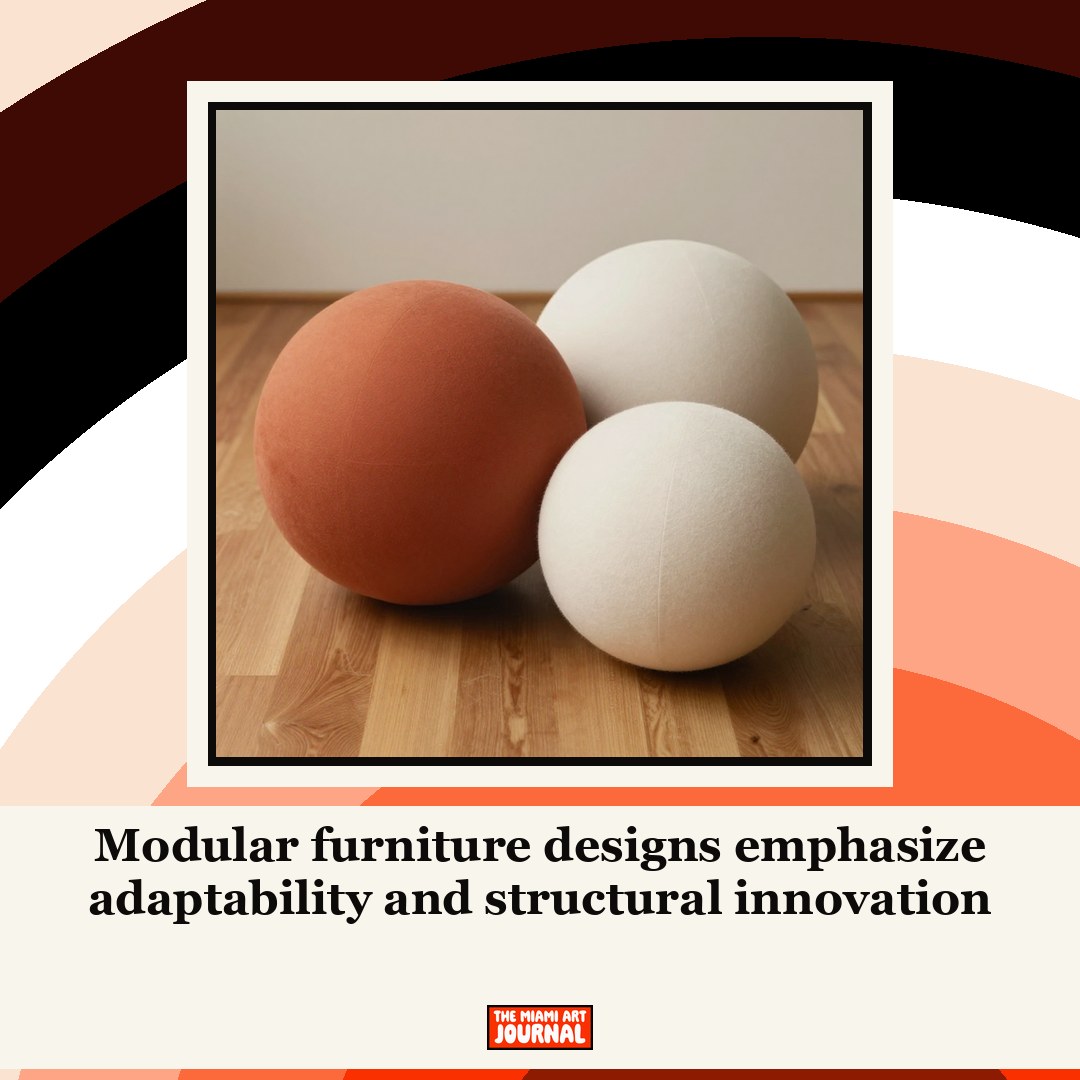
One of the featured items is the Amoreba system, created by the architecture and design studio Golem. This piece consists of hundreds of soft, upholstered balls that can be combined in a wide range of configurations. The studio used custom-designed software to model the three-dimensional surfaces of the modular system. The company states that the design is tailored to contemporary, non-conformist lifestyles, allowing for a high degree of personal arrangement.
Another entry in the roundup is the Thin collection, designed by the industrial design duo SF-SO. The shelves in this collection are made of metal and are just 1.6 millimetres thick. Despite their slender profile, the panels can support a significant amount of weight. The modular shelving panels are available in a variety of colours. They feature screws that slot through pre-drilled holes in the folded sections, a design choice that allows users to build the furniture themselves without specialized tools.
The London Design Festival provided the venue for plywood specialist Lozi to reveal its new modular system. The showroom on Hackney Road displayed clean-lined wardrobes and a fold-down bed. The pieces are intended as an alternative to bespoke cabinetry. The system allows users to mix and match individual standalone units to create a freestanding piece that mimics fitted joinery. Soroush Pourhashemi, the founder of Lozi, noted that the design functions similarly to the iconic Billy Bookcase design sold by Ikea, offering a flexible storage solution.
The Omi Series 2 Stool, designed by the Lagos-based studio Omi Collective, offers a reinterpretation of traditional African seating. The stool is distinguished by its striking Klein-blue colour and its six-legged structure. It can be divided into three standalone modules that are connected by steel rods. Olorunfemi Adewuyi, the founder of Omi Collective, stated that the stool’s modularity encourages community and shared ownership, as the pieces can be shared, taken apart, reassembled, and adapted.
Finally, the report included the Advanced Concepts 2.0 furniture by Dubbeldam Architecture + Design. The Toronto-based studio designed this tech-oriented office furniture to be highly flexible. The collection comprises a mobile workstation, an under-desk pet holder, and a ceiling system. The ceiling system uses coils that descend from a grid to partition space. The modular pieces are designed to accommodate the changing needs of modern work environments.
Takeaway: Users can assemble the Thin shelving units by slotting screws through pre-drilled holes in the folded metal sections.
El diseño de muebles modulares prioriza la adaptabilidad y la innovación estructural
Una publicación reciente destaca cinco sistemas de mobiliario distintos que priorizan la personalización del usuario y la flexibilidad espacial
The Editors · October 5, 2026
El informe presenta una selección de piezas modulares que van desde sistemas acolchados y suaves hasta estanterías rígidas de metal. El tema central que conecta estos elementos es la capacidad de los usuarios para configurar los objetos de diversas maneras según sus necesidades o espacios específicos. Este enfoque se aleja del mobiliario estático y de un solo propósito hacia sistemas que pueden evolucionar junto con el usuario.
Uno de los elementos destacados es el sistema Amoreba, creado por el estudio de arquitectura y diseño Golem. Esta pieza consiste en cientos de bolas suaves y acolchadas que se pueden combinar en una amplia variedad de configuraciones. El estudio utilizó software de diseño personalizado para modelar las superficies tridimensionales del sistema modular. La empresa señala que el diseño se adapta a estilos de vida contemporáneos y no conformistas, permitiendo un alto grado de arreglo personal.
Otra entrada en la recopilación es la colección Thin, diseñada por el dúo de diseño industrial SF-SO. Los estantes de esta colección están hechos de metal y tienen solo 1,6 milímetros de grosor. A pesar de su perfil esbelto, los paneles pueden soportar una cantidad significativa de peso. Los paneles de estantería modulares están disponibles en una variedad de colores. Presentan tornillos que se encajan en orificios preperforados en las secciones plegadas, una elección de diseño que permite a los usuarios construir el mobiliario ellos mismos sin herramientas especializadas.
El London Design Festival sirvió de escenario para que el especialista en contrachapado Lozi revelara su nuevo sistema modular. La sala de exposiciones en Hackney Road mostraba armarios de líneas limpias y una cama abatible. Las piezas están pensadas como una alternativa a la carpintería a medida. El sistema permite a los usuarios combinar unidades independientes individuales para crear una pieza autónoma que imita la carpintería empotrada. Soroush Pourhashemi, fundador de Lozi, señaló que el diseño funciona de manera similar al icónico diseño de la estantería Billy que vende Ikea, ofreciendo una solución de almacenamiento flexible.
El Taburete Omi Series 2, diseñado por el estudio con sede en Lagos Omi Collective, ofrece una reinterpretación del asiento tradicional africano. El taburete se distingue por su llamativo color azul Klein y su estructura de seis patas. Se puede dividir en tres módulos independientes que se conectan mediante barras de acero. Olorunfemi Adewuyi, fundador de Omi Collective, declaró que la modularidad del taburete fomenta la comunidad y la propiedad compartida, ya que las piezas se pueden compartir, desmontar, volver a ensamblar y adaptar.
Finalmente, el informe incluyó los muebles Advanced Concepts 2.0 de Dubbeldam Architecture + Design. El estudio con sede en Toronto diseñó este mobiliario de oficina orientado a la tecnología para ser altamente flexible. La colección comprende una estación de trabajo móvil, un soporte para mascotas bajo el escritorio y un sistema de techo. El sistema de techo utiliza bobinas que descienden desde una rejilla para dividir el espacio. Las piezas modulares están diseñadas para acomodar las cambiantes necesidades de los entornos de trabajo modernos.
Conclusión: Los usuarios pueden ensamblar las estanterías Thin encajando los tornillos a través de los orificios preperforados en las secciones de metal plegadas.