La edición en español de esta pieza está en preparación.
Miami's source for art, luxury living & technologyEst. 2026
The House
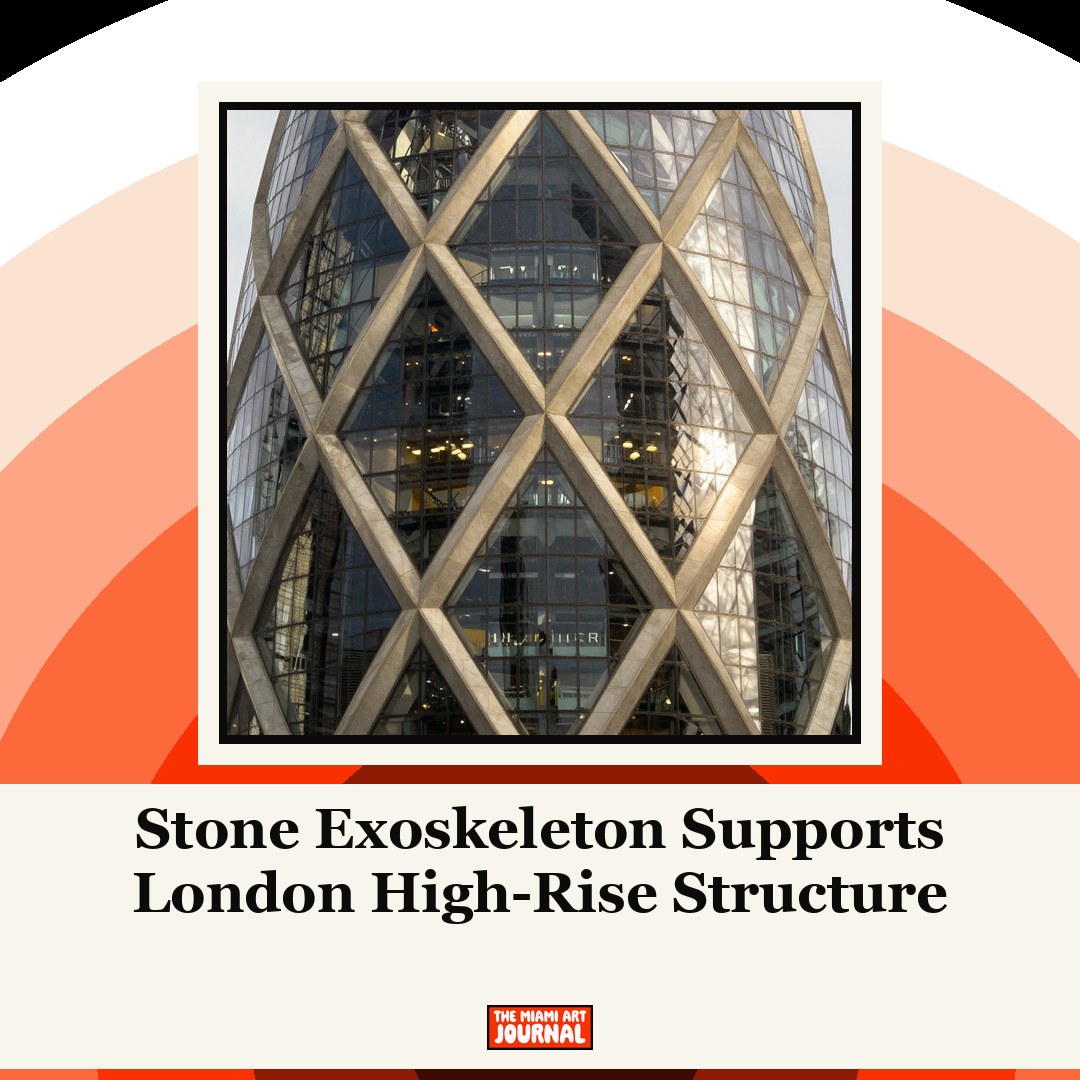
Stone Exoskeleton Supports London High-Rise Structure
Groupwork and Webb Yates complete Petra Heights using volcanic rock frame
The Editors ·
A housing development in north London has been constructed using a structural exoskeleton made entirely of stone, marking a departure from conventional building materials. The project, known as Petra Heights, is located at 317 Finchley Road and comprises three blocks ranging from six to ten storeys in height. The architecture studio Groupwork designed the building in collaboration with the engineering firm Webb Yates.
The structure relies on a thousand tons of volcanic rock to support its weight and resist wind loads. This stone exoskeleton replaces the concrete and steel typically used in high-rise construction. The building features no concrete stability core, no concrete columns, and no steel reinforcement bars. Because the stone serves as both the structural frame and the exterior facade, the project eliminates the need for additional cladding. Steve Webb, co-founder of Webb Yates, described the engineering solution as a world-first, noting that the stone carries all vertical and lateral forces. He stated that without this stone framework, the building would collapse into a pile of rubble.
The materials used in the exoskeleton include Sicilian basalt and Norwegian larvikite. The construction follows a post-and-lintel logic that mirrors the approach taken in Groupwork and Webb Yates’s earlier project, 15 Clerkenwell Close. That previous building, which received a Stirling Prize nomination, also utilized a load-bearing stone exoskeleton but remained shorter at six storeys and retained a concrete core for stability. Petra Heights removes this concrete element entirely, representing an escalation of the earlier design concept. The architects and engineers aim to demonstrate that stone can function as a stable, load-bearing structure for taller buildings.
This project forms part of a fifteen-year initiative by the studios to establish stone as a low-carbon alternative to steel and concrete. The firms argue that these conventional materials account for sixteen percent of global emissions. They posit that load-bearing stone is second only to carbon-sequestering timber in terms of sustainability. According to their calculations, using locally quarried stone can reduce the embodied carbon footprint of a building’s superstructure by up to ninety-five percent. Stone offers a potential advantage over mass timber in the UK, where fire regulations restrict timber use in buildings exceeding eighteen meters in height.
Research conducted by the firms suggests that a similar stone exoskeleton could support a thirty-storey skyscraper. Such a structure could achieve an eighty percent reduction in emissions compared to a steel frame, with no additional cost. Groupwork founder Amin Taha emphasized the sequential use of low-carbon materials, suggesting that architects should prioritize timber and then turn to stone where timber is not viable. The completion of Petra Heights provides a physical example of this material strategy in an urban high-rise context.
Takeaway: Load-bearing stone exoskeletons can eliminate concrete cores and reduce embodied carbon by up to 95 percent if quarried locally.
Exoesqueleto de piedra sostiene la estructura de un rascacielos en Londres
Groupwork y Webb Yates completan Petra Heights con un marco de roca volcánica
The Editors · September 8, 2026
Un desarrollo de viviendas en el norte de Londres se ha construido utilizando un exoesqueleto estructural hecho enteramente de piedra, lo que marca un alejamiento de los materiales de construcción convencionales. El proyecto, conocido como Petra Heights, se encuentra en la Finchley Road 317 y consta de tres bloques que varían entre seis y diez pisos de altura. El estudio de arquitectura Groupwork diseñó el edificio en colaboración con la firma de ingeniería Webb Yates.
La estructura depende de mil toneladas de roca volcánica para soportar su peso y resistir las cargas del viento. Este exoesqueleto de piedra reemplaza al hormigón y al acero que se utilizan típicamente en la construcción de rascacielos. El edificio no cuenta con núcleo de estabilidad de hormigón, columnas de hormigón ni barras de refuerzo de acero. Dado que la piedra sirve tanto como marco estructural como fachada exterior, el proyecto elimina la necesidad de revestimientos adicionales. Steve Webb, cofundador de Webb Yates, describió la solución de ingeniería como un primer mundo, señalando que la piedra soporta todas las fuerzas verticales y laterales. Afirmando que, sin este marco de piedra, el edificio se derrumbaría en un montón de escombros.
Los materiales utilizados en el exoesqueleto incluyen basalto siciliano y larvikita noruega. La construcción sigue una lógica de poste y dintel que refleja el enfoque tomado en el proyecto anterior de Groupwork y Webb Yates, 15 Clerkenwell Close. Ese edificio anterior, que recibió una nominación al Premio Stirling, también utilizó un exoesqueleto de piedra portante, pero permaneció más corto con seis pisos y conservó un núcleo de hormigón para la estabilidad. Petra Heights elimina este elemento de hormigón por completo, lo que representa una escalada del concepto de diseño anterior. Los arquitectos e ingenieros tienen como objetivo demostrar que la piedra puede funcionar como una estructura estable y portante para edificios más altos.
Este proyecto forma parte de una iniciativa de quince años de los estudios para establecer la piedra como una alternativa de bajas emisiones de carbono al acero y al hormigón. Las firmas argumentan que estos materiales convencionales representan el dieciséis por ciento de las emisiones globales. Plantean que la piedra portante es solo superada por la madera que secuestra carbono en términos de sostenibilidad. Según sus cálculos, el uso de piedra extraída localmente puede reducir la huella de carbono incorporada de la superestructura de un edificio hasta en un noventa y cinco por ciento. La piedra ofrece una ventaja potencial sobre la madera masiva en el Reino Unido, donde las regulaciones contra incendios restringen el uso de madera en edificios que superan los dieciocho metros de altura.
La investigación realizada por las firmas sugiere que un exoesqueleto de piedra similar podría soportar un rascacielos de treinta pisos. Tal estructura podría lograr una reducción del ochenta por ciento en las emisiones en comparación con un marco de acero, sin costo adicional. El fundador de Groupwork, Amin Taha, enfatizó el uso secuencial de materiales de bajas emisiones de carbono, sugiriendo que los arquitectos deberían priorizar la madera y luego recurrir a la piedra donde la madera no es viable. La finalización de Petra Heights proporciona un ejemplo físico de esta estrategia de materiales en un contexto de rascacielos urbano.
Conclusión: Los exoesqueletos de piedra portante pueden eliminar los núcleos de hormigón y reducir la carbono incorporado hasta en un 95 por ciento si se extrae localmente.